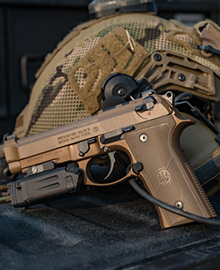
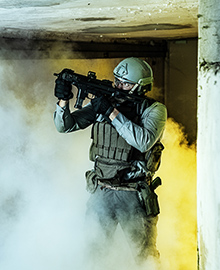
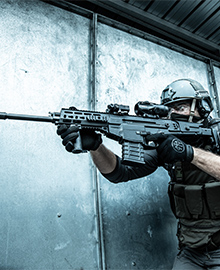
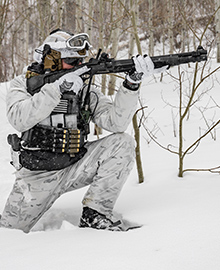
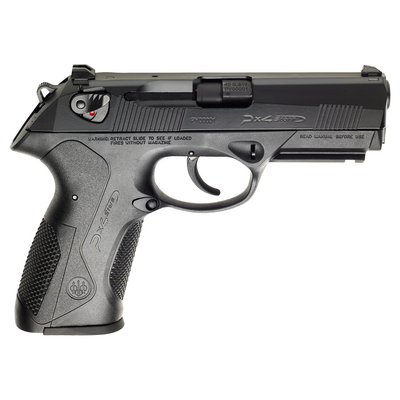
PX4 Storm Full Size - 9mm
9x19mm
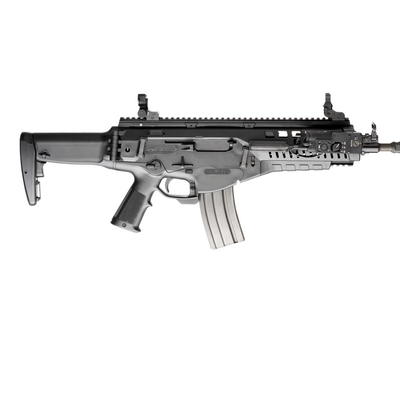
ARX 160 - 11"
5.56x45mm
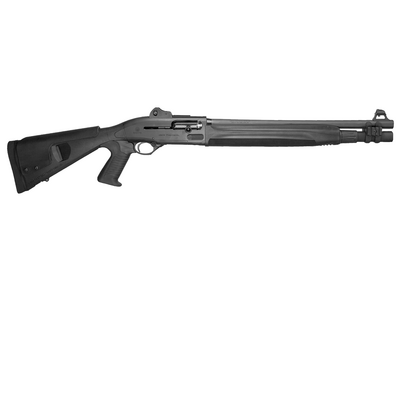
1301 tactical
12 gauge
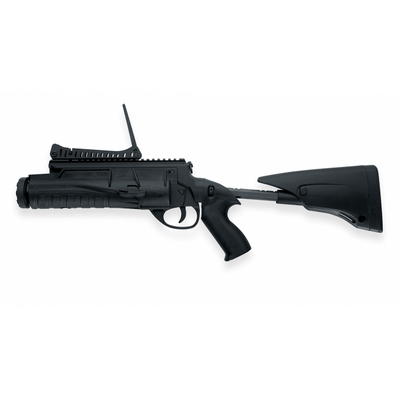
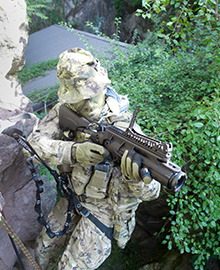
GLX160 - standalone
40x46mm
28 April 2026
Beretta Offers Romania Full Sovereign Production Capacity Under the SAFE Programme
And Calls for a Transparent, Competitive Selection Before European Funds Are Committed
Gardone Val Trompia, April 28th 2026
Fabbrica d’Armi Pietro Beretta S.p.A. — Europe’s oldest and most established small arms manufacturer, with products in service across more than 60 NATO and allied nations — confirms its full commitment to Romania’s individual weapons modernisation programme under the EU SAFE framework. Beretta formally calls on the Romanian Ministry of National Defence to conduct a transparent, competitive and technically rigorous selection process before any procurement decision is made or any European funding is committed.
NINE MONTHS WITHOUT A TRANSPARENT PROCESS
The SAFE Regulation entered into force on 29 May 2025. Romania subsequently obtained an allocation of €16.7 billion in SAFE loans, and adopted Government Emergency Ordinance (OUG) 2/2025 on 20 November 2025 to establish the national legal and procedural framework for implementing the programme. Nine months have now elapsed since the SAFE framework came into force — sufficient time to have conducted a thorough, competitive and comparative evaluation of all available options.
Instead, no formal competitive procedure has been initiated. Beretta received Romania’s Request for Information prior to the adoption of OUG 62/2025, which established the specific
legal and financial framework governing this procurement. Since OUG 62/2025 came into force, the Company has received no further direct communication from the competent Romanian authorities — nor has it been formally informed through Italian institutional channels.
This silence is not only procedurally anomalous: OUG 62/2025 itself, alongside the EU SAFE Regulation, explicitly requires that acquisitions financed under this framework be
conducted through transparent, competitive and technically grounded procedures. Those obligations have not been met.
As a consequence, Beretta’s proposal has been developed without access to the final technical and regulatory requirements established under OUG 62/2025, and cannot be considered complete. Evaluating it in its current form — or proceeding toward a procurement decision without allowing a full submission — would be incompatible with the principles of transparency, proportionality and equal treatment mandated both by OUG 62/2025 and by the EU SAFE Regulation (EU) 2025/1106.
Beretta formally requests that the Romanian authorities provide the complete specifications established under OUG 62/2025 and allow all interested European manufacturers to submit
comprehensive technical and industrial proposals before any assessment is conducted.
AN ENTIRELY EUROPEAN PROPOSAL — SAFE-ELIGIBLE, NATO QUALIFIED
Every system offered by Beretta under this programme is fully eligible under EU Regulation 2025/1106 (SAFE) and NATO-qualified across the relevant STANAG standards. All platforms are in active service with NATO member armed forces and operationally validated in the most demanding conditions. Beretta’s products and supply chain are established entirely within the European Union, ensuring compliance with the SAFE Regulation’s requirement that no more than 35% of component costs originate from outside the EU, EEA-EFTA or Ukraine.
The Beretta proposal is structured to deliver genuine, long-term Romanian sovereign capability:
– Immediate local production in Romania of all configurations required by the Government, including 5.56 mm assault rifles, 40 mm grenade launchers and 9 mm pistols;
– Progressive localisation of 5.56 mm light machine guns, 7.62 mm general-purpose machine guns and 7.62 mm sniper systems;
– Full transfer of technology, technical documentation, process data, industrial tooling and advanced training — ensuring Romania retains autonomous production and maintenance capability without dependence on any foreign licensor or export authorisation regime;
– Industrial partnerships with Romanian manufacturers and structured workforce upskilling programmes aligned with national employment and capability objectives.
All proposed deliveries are compatible with the SAFE Programme’s required timelines.
Beretta’s established industrial infrastructure, European supply chains and decades of NATO standard production experience provide Romania with a fast, reliable and fully SAFE compliant
path to operational readiness.
NON-EUROPEAN PROPOSALS CANNOT DELIVER THE AUTONOMY SAFE WAS DESIGNED TO BUILD
In mid-April 2026, SIG Sauer — a company headquartered and controlled in the United States, with production concentrated there — publicly announced its candidacy for Romania’s SAFEfunded
infantry weapons programme. Its CEO visited Romania and outlined a proposal involving the creation of a subsidiary and partial local production.
Beretta does not question SIG Sauer’s technical capabilities. However, the Company believes that the Romanian authorities and the European Commission must carefully assess whether
such a proposal genuinely satisfies the strategic and legal objectives of the SAFE Regulation.
Several structural concerns arise:
– SAFE Regulation Article 16 requires that prime contractors be established in the EU, EEA-EFTA or Ukraine, with executive management located in those territories, and that they are not subject to control by third countries except under strict conditions including FDI screening and binding security guarantees. A newly registered Romanian subsidiary of a US-controlled group does not, by itself, resolve these requirements.
– The SAFE Regulation caps non-EU component costs at 35%. SIG Sauer’s core manufacturing infrastructure, supply chains, intellectual property and design authority reside in the United States. Meeting this threshold — credibly and verifiably, not merely on paper — represents a structural challenge that partial localisation commitments do not automatically resolve.
– SAFE Category 2 requires contractors to possess the capacity to modify equipment without restrictions imposed by non-EU entities. For systems whose design authority and export licensing remain subject to US International Traffic in Arms Regulations (ITAR), this condition cannot be met without fundamental restructuring of intellectual property arrangements — arrangements that have not been publicly committed to.
This concern is not hypothetical. It reflects a documented pattern across European defence procurement. In Germany’s procurement process for new standard assault rifles for the Bundeswehr, SIG Sauer withdrew from the competition after the German Ministry of Defence introduced ITAR-free requirements. The company itself acknowledged that it would not have
had a realistic chance of winning under those conditions, citing the de facto incompatibility of its products with requirements designed to exclude ITAR-controlled items.
That German tender — won by a fully European manufacturer — provides a clear precedent for what genuine strategic autonomy looks like in practice.
Romania, as a SAFE beneficiary, is bound by the same European framework. Allocating EU loan funding to a programme that replicates external technological dependencies would contradict the explicit purpose of the instrument and expose Romania to the same strategic vulnerabilities — export authorisation dependencies, supply chain risks, and third-country control over critical platforms — that SAFE was designed to eliminate.
EUROPEAN RESOURCES SHOULD STRENGTHEN EUROPEAN CAPABILITIES
The SAFE Programme represents the most significant commitment of EU financial resources to defence in the Union’s history. Its stated purpose is to strengthen the European Defence Technological and Industrial Base, promote resilient European supply chains, and build genuine strategic independence.
Programmes funded by European taxpayers and backed by EU borrowing capacity should, first and foremost, generate lasting industrial and technological capability within Europe.
Purchasing systems whose design authority, production infrastructure and export control regime remain outside the EU — even through the intermediary of a local subsidiary — does
not achieve this objective.
In a context of growing geopolitical instability and increasing uncertainty around the durability of transatlantic security arrangements, the availability of domestic European manufacturing capacity for critical infantry systems is not a secondary consideration. It is a prerequisite for national and regional resilience.
READY TO ENGAGE — IMMEDIATELY AND FULLY
Beretta remains fully available to formally present its complete proposal to the Romanian Ministry of National Defence, the competent procurement and technical authorities, and any
relevant European institution, at the earliest opportunity. The Group is equally ready to engagé with the Italian Government and the European Commission to support the correct and lawful
conduct of this process.
Romania deserves a defence programme built on technical rigour, genuine industrial partnership and long-term sovereign capability. Beretta is committed to delivering exactly that
— and invites the Romanian authorities to ensure that all European manufacturers have the opportunity to compete on equal terms before this decision is made.
About Fabbrica d’Armi Pietro Beretta S.p.A.
Founded in 1526, Beretta is the world’s oldest active firearms manufacturer and a cornerstone of Europe’s defence industrial base. Its products are in service with the armed forces of more than 60 countries, including the majority of NATO members. All Beretta manufacturing, supply chains and design authority are established within the European Union. Beretta is headquartered in Gardone Val Trompia, Italy.